
AFRICA
Koyo Kouoh, Trailblazing Art Curator and Champion of African Creativity, Dies at 57


May 12, 2025 | AfroRadar.com
The global art community is reeling from the sudden loss of Koyo Kouoh, the visionary Cameroonian-Swiss curator whose transformative work elevated African contemporary art to new heights. Kouoh, who passed away on May 10, 2025, in Basel, Switzerland, at the age of 57, was a towering figure in the art world, celebrated for her intellectual rigor, passion, and unwavering commitment to amplifying African voices. Her death, attributed to a recently diagnosed cancer, comes just months after her historic appointment as the first African woman to curate the 2026 Venice Biennale, a milestone that underscored her profound influence.
Born in Douala, Cameroon, in 1967, Kouoh’s journey was one of resilience and reinvention. Raised in Cameroon before moving to Zurich, Switzerland, at age 13, she initially studied banking and business administration. However, frustrated by anti-Black racism in Europe, she returned to Africa in 1996, settling in Dakar, Senegal, where she found her calling in the vibrant art scene. There, she founded RAW Material Company in 2008, a groundbreaking art center that became a beacon for contemporary African art, fostering exhibitions, residencies, and critical discourse.
Kouoh’s impact extended far beyond Dakar. In 2019, she took the helm of the Zeitz Museum of Contemporary Art Africa (Zeitz MOCAA) in Cape Town, South Africa, during a period of institutional crisis. Under her leadership, the museum emerged as a global platform for African artists, with landmark exhibitions like When We See Us: A Century of Black Figuration in Painting (2022), which showcased 156 artists from Africa and its diaspora and is currently on view in Brussels. Her curatorial approach, which emphasized solo retrospectives and Pan-African narratives, redefined how African art is perceived, challenging Western-centric frameworks and celebrating Black self-expression.
“Koyo was not just a curator; she was an institution builder,” said Oluremi C. Onabanjo, associate curator of photography at the Museum of Modern Art. “She enlivened a sense of possibility for a generation of African curators across the globe.” Kouoh’s global reach was evident in her contributions to prestigious events like Documenta (2007, 2012), EVA International (2016), and the Carnegie International (2018), as well as her role in shaping the 1:54 Contemporary African Art Fair’s educational program.
Her appointment to curate the 2026 Venice Biennale, announced in December 2024, was a historic moment. As the second African-born curator to lead the world’s most prestigious art exhibition, following Okwui Enwezor in 2015, Kouoh was poised to bring her bold vision to a global stage. She was set to unveil the exhibition’s title and theme on May 20, 2025, a presentation now shrouded in uncertainty following her passing. The Biennale’s organizers expressed their grief, stating, “Her passing leaves an immense void in the world of contemporary art and in the international community of artists, curators, and scholars who had the privilege of knowing and admiring her extraordinary human and intellectual commitment.”
Kouoh’s legacy is also deeply personal. A mother of four—having given birth to one son and adopted three other children—she spoke of her transformative experiences in Switzerland and her spiritual beliefs rooted in African ancestral traditions. In a recent Financial Times interview, she reflected, “I do believe in life after death, because I come from an ancestral Black education where we believe in parallel lives and realities… I believe in energies—living or dead—and in cosmic strength.” Her love for Dakar remained unwavering, a city she credited with shaping her professional identity. “Dakar made me who I am today,” she said.
Tributes have poured in from across the globe. South African artist Candice Breitz called Kouoh “magnificently intelligent, endlessly energetic, and formidably elegant,” while Nigerian artist Otobong Nkanga described her as a source of “warmth, generosity, and brilliance.” Italian Prime Minister Giorgia Meloni noted that her death “leaves a void in the world of contemporary art.” On X, users expressed shock and sorrow, with one post stating, “A visionary curator, cultural leader, and unwavering advocate for contemporary African art. Her legacy reshaped the global art world.”
As the art world mourns, Kouoh’s contributions endure through the institutions she built, the artists she championed, and the narratives she reshaped. Zeitz MOCAA has announced a temporary closure out of respect, and the future of the 2026 Venice Biennale remains uncertain. Yet, as Kouoh herself believed, her energy will continue to resonate, inspiring generations to come.
Rest in power, Koyo Kouoh.
AfroRadar.com is dedicated to celebrating African excellence and amplifying stories that shape the continent’s cultural landscape. For more follow us on X @AfroRadar.

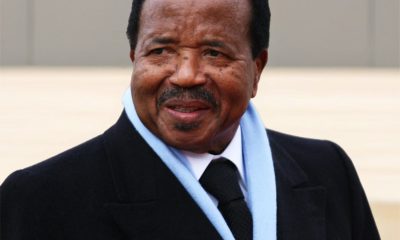


YAOUNDÉ, CAMEROON — At 92, President Paul Biya has won Cameroon’s latest presidential election, extending his 43-year grip on power. Representing the Cameroon People’s Democratic Movement (CPDM), Biya secured 53.66% of the vote, according to the Constitutional Council, while his main rival, Issa Tchiroma Bakary—a former ally now turned critic—trailed with 35.19%.
Protests Erupt Amid Claims of Fraud
The announcement has sparked outrage instead of celebration. Opposition leaders and activists have dismissed the results, accusing the government of rigging the vote. Tchiroma Bakary, who declared himself the winner before the official tally, called the election a “sham” and rallied his supporters to protest.
In cities like Douala, anger has spilled into the streets. Clashes between protesters and security forces have led to injuries and arrests, with young Cameroonians, fed up with decades under the same ruler, chanting for change and demanding their voices be heard.
A Nation Divided
Biya’s latest victory means more of the same for Cameroon—a government that promises stability but struggles with corruption, sluggish economic growth despite rich resources, and a lingering conflict in the Anglophone regions. With over 70% of Cameroonians under 35, many feel disconnected from a leadership that seems out of touch. Young people are increasingly vocal, pushing for a new generation to take the helm.
The world is watching. While some foreign leaders may send congratulations, Cameroon’s handling of the election and the unrest that follows will shape its ties with global partners and donors.
For Cameroon’s youth, another seven years of Biya feels like a rerun of a story they’re tired of living. The big question now is whether the government can find a way to connect with a generation demanding a say in their country’s future.
Afroradar.com will keep tracking the situation, bringing you updates and insights on Cameroon’s shifting political scene.

Ghana is still struggling to come to terms with a tragic military helicopter crash which killed eight people, including two government ministers and other top officials, on the morning of August 6, 2025.
The downed Ghanaian Air Force helicopter belonged to the Z-9 model and took off again from Accra en route to Obuasi at 09:12am but crashed after departure. They immediately began search efforts when the aircraft did not respond to radio contact. The helicopter was later reported to have crashed into a tree in the Adansi Akrofuom District of Ashanti Region, where it caught fire and burnt beyond recognition.
The crash killed Defense Minister Edward Omane Boamah, Environment, Science and Technology Minister Ibrahim Murtala Mohammed, Acting Deputy National Security Coordinator Muniru Mohammed, National Democratic Congress Vice Chairman Samuel Sarpong and former Parliamentary Candidate Samuel Aboagye as well as Squadron Leader Peter Bafemi Anala, Flying Officer Twum Ampadu and Sergeant Ernest Addo Mensah who were members of the crew.
National tragedy, Chief of Staff Julius Debrah declared during a press conference in the capital As the country mourns, flags are being flown at half mast on all government buildings as ordered by the government.
Rescue crews were on scene by 4 a.m., but by then the fire was so intense that little remained of the wreckage. It is not yet clear what prompted the crash — they are examining whether it could have been a technical fault or adverse weather conditions. The occurrence harks back to a military helicopter that crash-landed inside the Western Region in March 2024, but no one was injured in that accident.
The crash happened as Dr. Frank Amoakohene, the Minister for the Ashanti Region, was addressing an anti-galamsey event in Obuasi He rushed away to assist in coordinating the emergency response at the scene.
The government has vowed to provide support for the families of victims amid a wide probe to determine what led to the tragedy. At the moment, Ghana now awaits details of what might have caused such a tragic loss of lives.

Angolans Protesting High Fuel Prices in Capital Destroy Property in Marches Demonstrations in the streets of Luanda turned violent, and the police shot live bullets and tear gas.
Luanda, Angola — A peaceful strike by transport workers turned violent on Monday when the protesters took to the streets here to denounce a government measure to increase the price of fuel to 400 kwanzas a liter from about 300 kwanzas. The unrest has left businesses vandalized, residents shaken and questions swirling over the financial future of Angola.
The evening also brought burning tires and shattered storefronts along Broadway from 3rd to 7th. Two athletic sneaker stores and a T-Mobile store fared the worst — their windows smashed and their booty scattered. Video clips that made the rounds on social media showed protesters yanking buses to a halt and forcing them to discharge their passengers, and confronting drivers who were reluctant to join the three-day strike.
“The people are starving, and the government is killing us,” said Adilson Manuel, who is the spokesman for the social movement against the fuel hike. His comments echoed the frustration of many Angolans, who see the price jump as the latest blow to households already struggling with unemployment and an uptick in prices.
July 4, Angola’s government lifted fuel subsidies as part of an ongoing plan to reduce spending to comply with International Monetary Fund conditions under an economy support loan program to the heavily indebted African nation. It’s a paradox not lost on demonstrators: Despite its status as one of the world’s top oil-producing countries, Angola has to import most of its refined fuel because it lacks sufficient domestic refining capacity.
The figures and statistics paint a harsh picture for everyday Angolans. They increased taxi fares to 300 kwanzas a ride and a public bus ride in the city now costs 200 kwanzas. “It’s intolerable that the government is always trying to make our lives more difficult,” said one street vendor, Custodia dos Santos.
The police response was swift and brutal. The riot police and gendarmes used tear gas, batons and rubber bullets to push back protesters in a demonstration on 12 July, in which nine people were injured and 17 others arrested. One protester remains in custody, charged with the incitement of violence. Police claimed the protesters were going beyond agreed-upon routes — a charge organizers vehemently deny.
The crackdown reflects broader tensions within Angola, where the ruling MPLA party has held power for five decades. The signing into law of a contentious piece of legislation by President João Lourenço in August 2024 that imposes prison sentences of up to 25 years for damage caused during protests, has come in for heavy criticism from human rights groups accusing it of being designed to suffocate opposition.
The police violence against protesters in Angola is stomach-churning,” said Khanyo Farisè of Amnesty International, which found a pattern across 11 protests from 2020 to 2025 that left a minimum of 17 dead, with no officer held responsible.
The government has accused the opposition of fomenting the protests ahead of the election that will see multimillionaires in 2027, particularly UNITA. UNITA shot back, condemning the “autocratic attitude” of the police and heavy-handedness.
Defying even as the strike drags on.” Activist Laura Macedo has called for a stay-at-home strike, and organisers are working on a petition to the president, João Lourenço, and finance minister, Vera Daves, demanding Abreu’s decision is reversed.
The unrest has exposed a growing chasm between the rulers of Angola and a public that increasingly feels sidelined by policies prioritizing fiscal rectitude over social justice. We are facing hunger, the whole country is facing hunger, but our president is paying no attention at all.
With violence escalating and negotiations stalled, Angola hangs on the precipice of something. Here is the question now: Will leadership hear the voices of the streets, or will it seek to double down on a course that can only deepen the estrangement of the people from the people who govern them?
- Track the rest of this unfolding story (if that’s what it is) on Afroradar. com. *
Afroradar. com condemns violence of any kind, and not withstanding the newsworthiness of the circumstances surrounding the public protests, does not condone the use of vandalism and property destruction. We call for peaceful dialogue and an end to violence through credible, inclusive leadership, and we continue to demand accountability consistent with the will of the Malian people.
-

 AFRICA8 years ago
Ghanaians reject the establishment of a U.S. “military base” in their country.
-

 AFRICA8 years ago
United States: Burkinabe student Mohamed Koanda wins the prestigious 2018 Chancellor’s Award for Excellence.
-

 AFRICA8 years ago
Inside the World of Jeanne-Grace Seri: Ivory Coast’s Wedding Planning Queen in Texas
-

 AFRICA8 years ago
Princess Guimbi Ouattara: The 19th-Century Heroine Who Saved Her Burkina Faso City Through Diplomacy
-

 News8 years ago
Black Woman Brutalized and Arrested at Alabama Waffle House Over Plastic Utensils
-

 CULTURE8 years ago
Koiffure Kitoko Saison 3: La Guinéenne Patricia repart avec les 5 millions
-

 Fashion8 years ago
Ahmed Tailly, le très discret styliste ivoirien qui habille Beyoncé, Kim Kardashian et Kanye West
-

 MUSIQUE8 years ago
VIDEO-Alpha Blondy enflamme la nouvelle salle de spectacle Sony Hall de New York